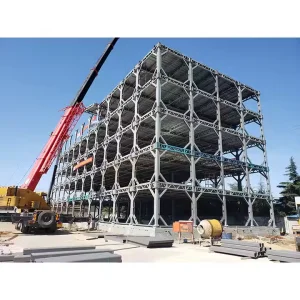
Explore our industry-certified smart prefabricated container offices, modular classrooms, and multi-story structural steel systems engineered for structural longevity.
The global construction industry is undergoing a structural paradigm shift from traditional, in-situ concrete pouring to off-site manufacturing (OSM) and Modern Methods of Construction (MMC). Among these advancements, the modular villa sector has emerged as the fastest-growing segment in both residential and commercial hospitality construction. In 2023, the global modular construction market was valued at approximately USD 92.5 billion and is projected to compound at a CAGR of 7.2% through 2030. This growth is driven by structural labor deficits, stringent municipal decarbonization policies, and the urgent economic requirement to compress project commissioning cycles.
Across North America and Western Europe, modular villas are no longer seen merely as temporary structures. Instead, they represent high-end, architecturally customizable, and structurally resilient estates. By shifting over 85% of structural, MEP (Mechanical, Electrical, Plumbing), and architectural finish workflows to controlled factory environments, project developers mitigate climate risks, eliminate site waste by up to 60%, and decrease overall project timelines by 30% to 50%.
When vetting modular suppliers, enterprise-level B2B buyers must evaluate technical competencies beyond simple cost-per-square-meter quotes. A true Tier-1 manufacturer possesses robust engineering certifications, advanced metallurgy protocols, and comprehensive integration capabilities.
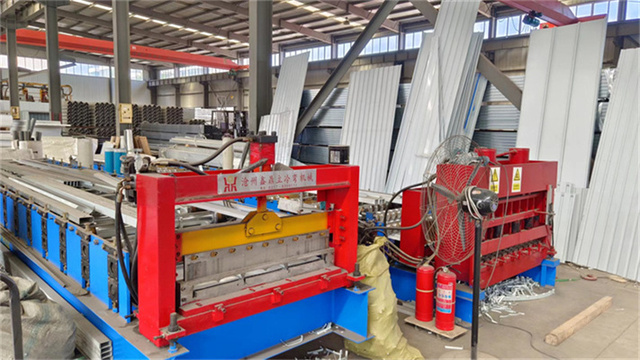
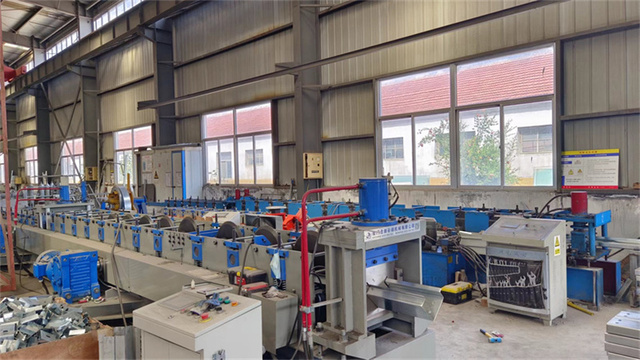
Top-tier manufacturers utilize computerized CNC structural roll-forming machines (such as FrameCAD or Howick systems) running structural steel conforming to ASTM A653 or AS/NZS 4600. The zinc coating mass (e.g., Z275 or AZ150) must be chemically verified to guarantee zero structural corrosion for at least 50 years under high humidity.
Architectural compliance in harsh cold regions (such as Scandinavia, Canada, and Northern US) or high-heat zones (Middle East) demands high-density insulation. Look for factories offering integrated structural insulated panels (SIPs) or continuous rockwool/polyurethane (PU) insulation profiles designed to satisfy local R-values.
One of the most complex aspects of volumetric modular manufacturing is the integration of MEP systems. Leading factories perform pre-wiring and pre-plumbing at the assembly stage, utilizing international conduit standards (UL, CE, AS/NZS) and pre-installing distribution boxes and quick-connect manifolds.
China leads the world in modular construction capacity, combining complete local supply chains, advanced steel mills, and specialized shipping infrastructure. Within this framework, Ningbo Eky Home Co., Ltd. stands out as a highly specialized modular house and prefabricated home manufacturer in China.
Situated in Ningbo—home to the world’s busiest port by cargo tonnage—Ningbo Eky Home leverages direct maritime access to drastically lower international shipping costs. Our industrial capabilities allow us to manage every stage of production in-house:
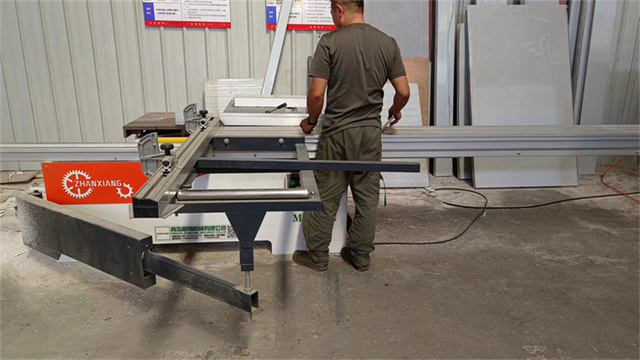
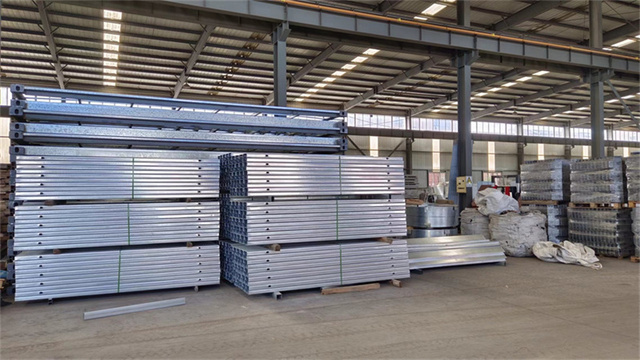
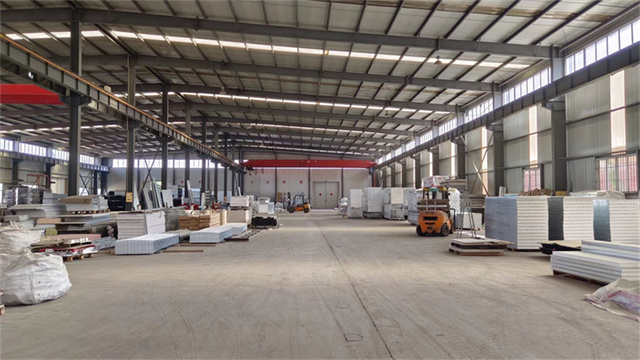
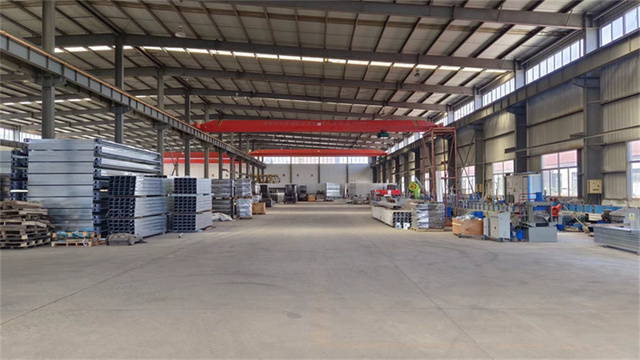
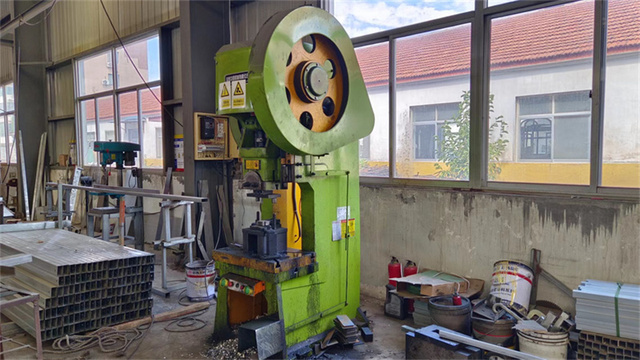
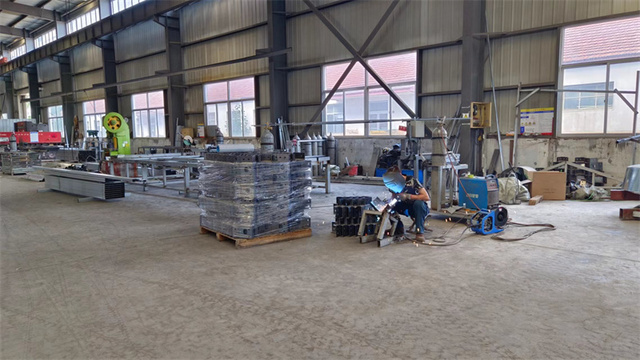
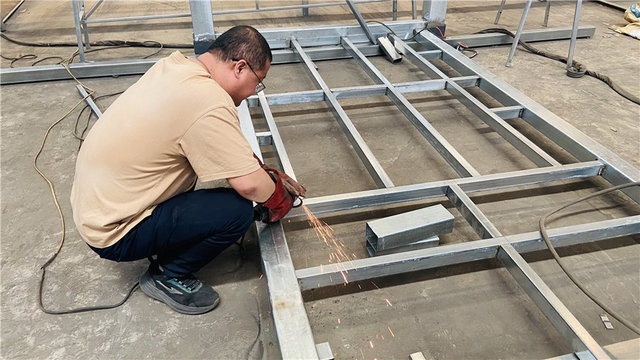
Our industrial plant in Ningbo utilizes advanced steel fabrication lines, automated profile cold-forming machinery, and testing facilities to conduct strict quality inspections prior to packing. Every batch of steel is tested for yield strength, elongation, and coating thickness to meet global architectural codes.
B2B buyers, including resort developers, real estate investment trusts (REITs), civil contractors, and mining operators, face specific challenges when procuring modular villas internationally. Managing logistics, structural validation, and on-site assembly requires strategic planning.
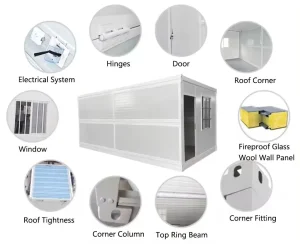
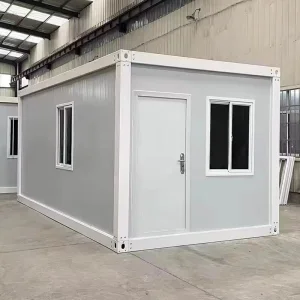
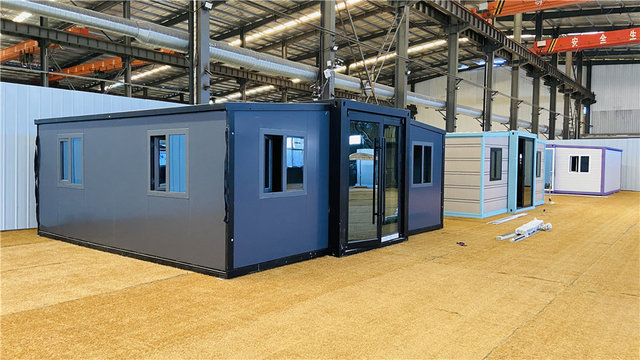
Volumetric modular units (3D modules) offer rapid on-site assembly but incur high shipping costs. Many global buyers utilize flat-pack configurations or expandable container systems to maximize container volume. This optimizes ocean freight while remaining simple to assemble on-site.
Customs clearance and local build approvals require matching local structural and electrical codes. Ningbo Eky Home resolves this by engineering structural frames to match specific national standards, including IBC (US), Eurocodes (EU), and AS/NZS 1170 (Australia/NZ).
Evaluating a supplier on the Ex-Works (EXW) price alone is a common procurement error. A comprehensive TCO analysis must factor in domestic transport, port handling, shipping insurance, duty, foundation preparation, site crane hire, on-site mechanical connection, and finishing labor costs.
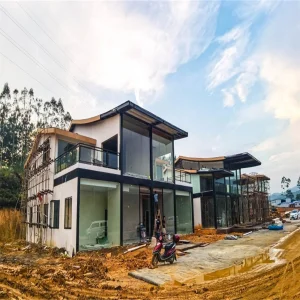
Modular villa manufacturing supports diverse commercial and civil applications. Because prefabricated steel frameworks can scale easily, they are used across multiple sectors globally:
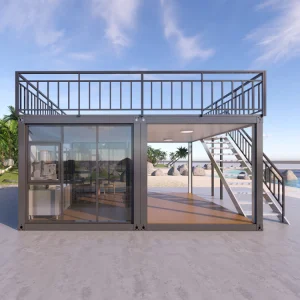
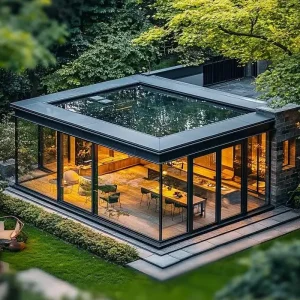
For boutique hotels and eco-tourism projects located in environmentally sensitive areas, traditional construction is often restricted. Prefabricated villas with helical screw pile foundations minimize land disturbance. Modules arrive on-site pre-finished, ensuring minimal disruption to local flora and fauna while shortening the path to project monetization.
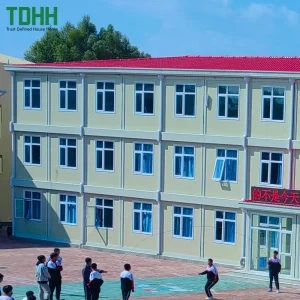
Rapid population growth and shifting urban dynamics often create unexpected demands for educational space. Modular classroom structures and administrative blocks can be deployed during brief school holiday breaks, offering safe, thermally efficient, and acoustically insulated learning spaces that comply with municipal educational building standards.
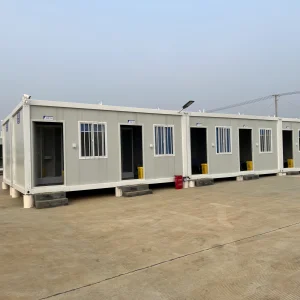
Resource extraction projects are often located in remote, climatically extreme regions where local labor is unavailable. Sturdy flat-pack container systems and multi-story structural steel dormitories provide comfortable, insulated housing. They feature modular bathrooms and integrated HVAC systems to support workforce safety and productivity.
The modular housing industry is continually evolving with new technology. Sourcing agents should monitor three key trends when planning long-term procurement programs:
Building Information Modeling (BIM) platforms directly export architectural files to factory roll-forming machinery. This process reduces spatial collisions to zero, ensures high dimensional accuracy, and enables automated material take-offs for more predictable project budgeting.
Advanced factories now design modular villas to accommodate roof-mounted photovoltaic (PV) arrays, battery energy storage systems (BESS), smart energy management controls, and low-flow plumbing fixtures. This supports compliance with LEED, BREEAM, or Passivhaus energy certifications.
Integrating hot-rolled steel structures with light-gauge steel framing and cross-laminated timber (CLT) allows for larger spans, open floor plans, and increased ceiling heights. These hybrid systems maintain structural integrity while supporting modern architectural aesthetics.
Modular components are increasingly logged in digital material databases, allowing structural frames, wall panels, and cladding to be reused or recycled at the end of the building's lifecycle. This matches global environmental goals and reduces carbon footprints.
Ningbo Eky Home Co., Ltd. is a professional manufacturer of modular houses, prefabricated homes, and portable building solutions in China. With years of expertise in modular construction and advanced manufacturing capabilities, we provide innovative, cost-effective, and sustainable building systems for customers across residential, commercial, industrial, and public infrastructure sectors.
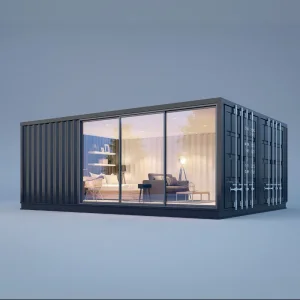
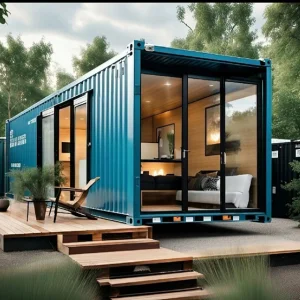
Our product portfolio includes modular houses, prefabricated homes, portable cabins, expandable houses, container houses, modular villas, site offices, worker accommodation, classrooms, healthcare facilities, commercial buildings, hotels, security houses, storage buildings, and customized modular construction projects. Designed for rapid installation and efficient transportation, our products help reduce construction time, labor costs, and environmental impact while maintaining exceptional structural strength and long-term reliability.
At Eky Home, we combine modern production technology with strict quality management throughout every manufacturing process. Our experienced engineering team offers comprehensive OEM and ODM services, including customized floor plans, structural engineering, insulation systems, electrical and plumbing integration, interior finishing, exterior cladding, and project-specific solutions tailored to different market requirements.
Our modular buildings are manufactured using premium galvanized steel structures, high-performance insulated panels, and quality building materials that comply with international standards. They offer excellent resistance to corrosion, earthquakes, strong winds, and harsh climates while providing superior thermal insulation, energy efficiency, and low maintenance.
Eky Home's modular construction solutions are widely applied in residential communities, construction camps, mining projects, educational institutions, healthcare facilities, tourism resorts, commercial developments, government infrastructure, disaster relief housing, and temporary office projects. We continuously invest in product innovation, intelligent manufacturing, and sustainable building technologies to meet the evolving needs of global customers.
Today, our products are exported to Europe, North America, South America, Southeast Asia, the Middle East, Africa, and Oceania, where we have established long-term partnerships with contractors, developers, distributors, and engineering companies.
As a trusted modular house manufacturer in China, Ningbo Eky Home Co., Ltd. is committed to providing premium-quality products, flexible customization, competitive pricing, reliable delivery, and professional technical support. We strive to create efficient, sustainable, and future-ready modular building solutions for customers worldwide.
Technical, logistical, and structural answers to simplify global procurement processes.
The structural frame of a premium modular villa, when constructed using hot-rolled or light-gauge galvanized steel conforming to structural grades (like Q235B or Q345B) and coated with zinc protection (Z275/AZ150), has a design lifespan of 50 years or more. Architectural cladding and interior finishes may require standard maintenance or replacement cycles every 15 to 20 years, depending on environmental exposure.
Modular structures perform exceptionally well under seismic stress. Their high strength-to-weight ratio and flexible structural connections allow the steel frame to deform slightly without failing. Ningbo Eky Home designs and engineers frames to withstand wind loads up to 120 km/h (equivalent to a Class 12 Typhoon) and seismic forces up to Grade 8, depending on the client’s local building regulations.
We integrate conduits, distribution boxes, pipes, and connection points within the modules during factory assembly. These systems are selected to comply with the destination country's regulations (such as UL/CSA for North America, CE/EN for Europe, and SAA/AS/NZS for Oceania). This allows local electricians and plumbers to connect services to main utilities quickly on site.
Flat-pack systems ship as flat panels (roof frame, floor frame, and wall columns packed together). This maximizes shipping space, allowing up to 4 units to fit into a single 40ft High Cube container, which lowers freight costs. Volumetric modular systems, by contrast, are shipped as pre-assembled 3D structural boxes. While they require higher shipping costs, they minimize on-site assembly work.
Yes, Ningbo Eky Home provides comprehensive OEM and ODM support. Our design team works with clients to customize floor plans, door and window layouts, wall finishes, flooring, lighting, kitchen cabinets, and sanitary facilities to match localized aesthetic preferences and budget requirements.
By fabricating structural elements inside a controlled factory environment, material wastage is reduced by up to 60% compared to traditional on-site construction. Additionally, modular assembly reduces heavy machinery usage and site noise, and simplifies recycling at the end of the building's lifecycle.
Common foundation types include concrete strip foundations, slab-on-grade, and concrete piers. For environmentally sensitive sites or difficult terrain, steel screw piles are highly effective. They can be installed quickly and minimize soil disturbance.
All modular units are packed securely using industrial packing materials. We arrange inland transport to the Port of Ningbo, manage export customs clearance, and provide all necessary documentation (Bill of Lading, Certificate of Origin, Packing List, Structural Test Reports) to facilitate smooth import clearance at the port of destination.
Browse our heavy-duty steel warehouses, luxury steel villas, and expandable modular cabins designed for high energy efficiency and structural stability.
 Eky Home