Global projects face a difficult combination: housing shortages, rising labor costs, complex logistics, and strict local regulations. A modular house manufacturer can address these pressures through factory-controlled production, repeatable quality checks, and faster site installation. McKinsey & Company reported that modular construction may reduce project schedules by 20% to 50%, while lowering costs by up to 20% in suitable conditions. The numbers are promising. They are not guarantees.
The real question is how to choose a modular house manufacturer for a project spanning different climates, currencies, and building codes. A reliable partner should provide tested structural systems, documented materials, transparent production timelines, and experience with international shipping. Picture a coastal site receiving wall panels, windows, and insulation kits in labeled containers. Small errors in packaging can create large delays. Strong manufacturers therefore coordinate design, factory inspection, customs paperwork, and on-site assembly as one process.
Sustainability also matters. The United Nations Environment Programme’s 2023 Global Status Report states that buildings and construction represented about 37% of global energy-related carbon emissions in 2022. Efficient modular design can reduce material waste and support better energy performance, but only when insulation, ventilation, and local climate conditions are properly engineered. This is where professional judgment matters. A factory may be excellent, yet unsuitable for a tropical or seismic market. Buyers should compare verified case studies, certifications, quality-control records, and after-sales support. No supplier is perfect. Careful evaluation remains essential.
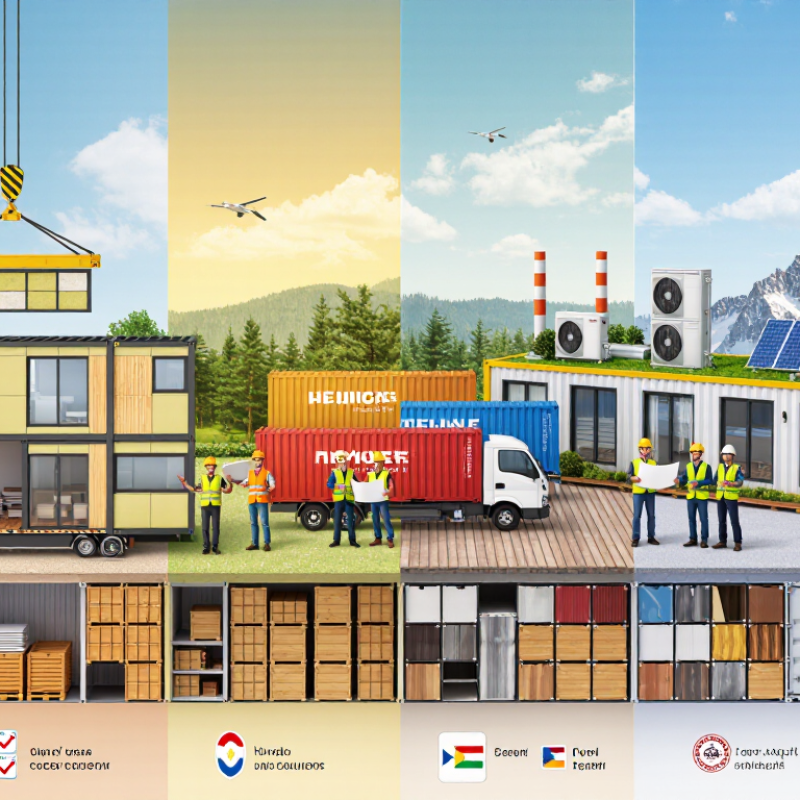
Why Choose a Modular House Manufacturer for Global Projects?
What Is a Modular House Manufacturer?
A modular house manufacturer designs, engineers, and builds homes in a controlled factory environment. Instead of constructing every room on-site, workers produce finished modules indoors. These modules may include walls, floors, wiring, plumbing, insulation, and interior fittings. Cranes then place them on prepared foundations. Site teams connect services and complete external work. This process can reduce weather delays and improve production consistency. It also creates clearer quality records, from material inspections to final factory checks.
For global projects, the manufacturer must understand more than factory production. It should coordinate shipping dimensions, local building codes, climate demands, and installation methods. A reliable team provides drawings, testing documents, packing plans, and technical support. Experience matters when a coastal project needs corrosion resistance or a cold region requires stronger insulation. Yet modular does not mean effortless. Transport damage, foundation errors, or unclear responsibilities can still delay a project. That risk is easy to underestimate.
Tips: Ask how the modules are tested before shipment. Request a sample quality checklist. Confirm who handles local approvals and site installation. Check whether the design can be adapted without weakening structural performance. Visit a factory if possible. Seeing the process helps reveal gaps that brochures often hide.
| Data Dimension | What a Modular House Manufacturer Provides | Typical Industry Benchmark | Global Project Value |
|---|---|---|---|
| Definition | A specialized company that designs, engineers, manufactures, assembles, and coordinates the delivery of building modules produced in a controlled factory environment. | Modules are usually manufactured as volumetric sections or prefabricated structural panels. | One coordinated supply partner can reduce the number of separate contractors involved in an international project. |
| Construction Speed | Factory production and site preparation can proceed at the same time. | Overall project delivery is commonly reported as approximately 30%–50% faster than comparable conventional construction, depending on design and approvals. | Shorter schedules can support faster occupancy, earlier revenue generation, and reduced exposure to weather-related delays. |
| Factory Quality Control | Standardized work instructions, repeatable assembly processes, dimensional checks, and documented inspections are applied before shipment. | Factory production provides more consistent working conditions than fully exposed site construction. | Consistent inspection records make it easier to manage quality across multiple countries and project locations. |
| Design Standardization | Repeatable room layouts, structural grids, service zones, and connection details can be adapted for different project types. | Standardized components can reduce design repetition while preserving options for finishes, layouts, and building services. | A repeatable platform is useful for hotels, workforce housing, student accommodation, healthcare facilities, and residential developments. |
| Local Code Adaptation | The manufacturer coordinates structural, fire, thermal, electrical, plumbing, and accessibility requirements with local consultants and authorities. | Requirements vary by jurisdiction; seismic, wind, snow, fire, energy, and accessibility standards must be checked for each location. | Early code review helps prevent redesign, customs delays, failed inspections, and costly site modifications. |
| Material Efficiency | Materials are measured, cut, stored, and assembled in a controlled production line with repeatable specifications. | Off-site construction is commonly associated with lower material waste than traditional site-based construction; actual savings depend on design and production controls. | Better material planning can reduce disposal costs and improve environmental reporting for international developments. |
| Weather Exposure | A large portion of the building work is completed indoors, while foundations and final connections are completed on site. | Factory production can reduce the effect of rain, snow, extreme heat, and other weather disruptions on the main building process. | This is especially valuable in regions with short construction seasons or difficult weather conditions. |
| Transportation Planning | The manufacturer plans module dimensions, lifting points, loading sequences, route restrictions, packaging, and delivery milestones. | Transport feasibility depends on module size, road limits, port access, permits, handling equipment, and final-site conditions. | Early logistics engineering reduces the risk of oversized-load restrictions, handling damage, and delivery interruptions. |
| Scalability | The same approved design system can be used for multiple buildings, phases, or locations with controlled modifications. | Production capacity is limited by factory throughput, labor, materials, shipping availability, and quality-control resources. | A scalable manufacturing process supports phased housing programs and multi-site developments. |
| Cost Visibility | The manufacturer can separate factory production, packaging, shipping, installation, foundations, local works, taxes, and permits in the project budget. | Total installed cost varies significantly by location, specification, labor rates, exchange rates, duties, and site conditions. | A transparent cost structure improves comparisons between suppliers and helps identify costs that are often excluded from factory quotations. |
| Site Labor Requirements | Site teams typically focus on foundations, utilities, cranage, module placement, connections, weatherproofing, and finishing works. | The amount of site labor depends on the degree of completion at the factory and the project delivery model. | Reduced site labor can be beneficial in remote areas or regions facing skilled-worker shortages, provided qualified installers are available. |
| Risk Management | Design coordination, production tracking, inspection records, shipping plans, and installation procedures are managed as an integrated workflow. | Risk is reduced when design, procurement, manufacturing, transport, and installation responsibilities are clearly documented. | A defined responsibility matrix helps international clients control schedule, quality, compliance, and communication risks. |
| Best-Fit Project Types | The manufacturer is generally most suitable for projects with repeatable units, clear performance requirements, and sufficient access for transport and lifting. | Common applications include residential communities, hotels, student housing, workforce accommodation, clinics, schools, and temporary facilities. | Modular delivery can provide a practical balance of speed, repeatability, quality control, and location flexibility for global projects. |
Modular homes begin with a coordinated digital model, not a factory line. Architects define room sizes, service routes, structural loads, and local climate requirements together. Engineers then test transport limits, lifting points, insulation, and connection details before production starts. A bathroom module may leave the factory with pipes, wiring, wall panels, and fixtures already installed. This controlled sequence reduces weather exposure and makes quality checks more repeatable.
The 2019 report Modular Construction: From Projects to Products estimated that modular methods could create over $100 billion in annual value across major construction markets. It also identified potential cost savings of about 20 percent in suitable projects.
These figures are not guaranteed. Site access, customs procedures, and local codes can quickly change the result. The 2023 Global Status Report for Buildings and Construction found that buildings and construction produced 37 percent of global energy and process-related carbon emissions.
Manufacturers therefore need to design for efficient insulation, low-waste cutting, and repairable components. Small details matter. A poorly sealed joint can waste energy for years.
Production usually follows a repeatable path: material inspection, precision cutting, frame assembly, service installation, enclosure, testing, and final packing.
However, factory precision is not enough. On-site teams must still verify foundations, tolerances, drainage, and connections. That is where many projects become less perfect than the drawings. Good manufacturers document changes, test samples, and revise future modules instead of hiding defects.
Global construction rarely follows one familiar pattern. Climate, labor skills, transport routes, and building regulations vary widely. Modular construction supports these differences through controlled factory production and planned site assembly. A capable modular house manufacturer can coordinate design, fabrication, shipping, and installation from one project framework.
Factory work provides measurable quality checks. Teams can inspect wall joints, insulation layers, wiring routes, and plumbing connections before transport. This reduces weather exposure and limits avoidable site delays. Digital drawings also help engineers review structural loads, fire safety, energy performance, and local code requirements. Details matter. A small measurement error can become expensive after delivery.
Global projects still need flexibility. Modules may require reinforced packaging for long sea journeys or modified foundations for difficult soil. Local contractors should review access roads, cranes, utility connections, and emergency procedures early. This creates stronger cooperation between factory specialists and regional professionals. However, modular construction is not automatically faster or cheaper. Poor planning can cause redesigns, customs delays, or damaged components. That risk deserves honest attention.
Experience improves judgment. Manufacturers that document inspections, material sources, testing procedures, and installation records offer greater project reliability. They should also explain limitations clearly, rather than promising identical solutions everywhere. A practical approach may combine factory-built rooms with locally completed finishes. That balance can respect regional skills, reduce transport demands, and support long-term maintenance. Global projects need more than attractive units. They need verified details, adaptable planning, and accountable communication at every stage.
Global urban population is projected to grow from approximately 4.4 billion people in 2020 to 6.7 billion by 2050. This sustained demand for housing and infrastructure highlights the value of modular construction, which can support faster delivery, standardized quality control, and scalable deployment across different regions. Data source: United Nations, World Urbanization Prospects 2018.
Why Choose a Modular House Manufacturer for Global Projects?
Selecting an international modular house manufacturer requires more than comparing prices. Practical experience shows that production quality depends on repeatable processes, trained teams, and clear inspection records. Ask for factory photographs, material specifications, and completed project references from similar climates. A reliable manufacturer should explain structural design, fire safety, insulation, and local code compliance without vague promises. Independent certifications and third-party inspections add useful confidence. They do not replace careful questioning.
Tips: Check the manufacturer’s export experience, shipping methods, and installation support. Confirm who manages drawings, permits, customs documents, and site coordination. Request a sample wall section or bathroom module before approving full production. Review the warranty in writing, including response times and replacement procedures. Communication matters too. A weekly progress report can prevent small errors from becoming expensive delays.
International projects often face changing weather, port congestion, and different construction standards. The manufacturer should offer adaptable designs, accurate packing lists, and realistic delivery schedules. Ask how moisture is controlled during transport and storage. Also examine payment stages and quality checkpoints. No supplier is flawless, and an attractive presentation can hide weak after-sales support. A careful buyer should test claims against documents, references, and factory evidence. Sometimes, a slightly higher quotation protects the project from rework, although that is not always obvious at the beginning.
Global modular projects depend on disciplined delivery, not factory speed alone. Modules are completed indoors, inspected, protected, and prepared for transport. The 2019 report Modular Construction: From Projects to Products found that modular methods can reduce construction schedules by 20% to 50%. That advantage matters when weather, labor shortages, or remote locations disrupt traditional building work.
A typical shipment moves by truck, ship, or rail. Engineers first check module dimensions, lifting points, road limits, port access, and local installation rules. UNCTAD’s Review of Maritime Transport 2023 reported that ships carry over 80% of global merchandise trade by volume. However, a module is not an ordinary container. Its height, weight, insulation, and fragile finishes require route surveys and careful securing.
At the site, crews prepare foundations before the modules arrive. Cranes then lift each unit into position, often within hours. Electricians, plumbers, and inspectors connect the final services afterward. This sequence reduces on-site waste and keeps work more predictable. Still, the model is not frictionless. A perfect factory plan can meet an imperfect road, delayed customs clearance, or an unready foundation. Experienced manufacturers use digital tracking, weather checks, spare materials, and local installation teams to manage those gaps. Some projects still need redesign after transport reviews. That is not failure; it is a reminder that global delivery requires practical flexibility.
It designs and builds home sections inside a controlled factory. Modules may include walls, flooring, wiring, plumbing, insulation, and interior fittings. Cranes place them onto prepared foundations. Not everything happens indoors.
Factory production can reduce weather delays and improve quality consistency. It also creates clearer inspection records. However, shipping, customs, and local approvals can still cause delays.
Architects and engineers create a coordinated digital model. They study room sizes, service routes, structural loads, insulation, and lifting points. A bathroom may leave the factory with pipes and fixtures installed.
Yes, designs can adapt to cold, coastal, humid, or hot regions. Cold areas may need stronger insulation. Coastal sites may require corrosion-resistant materials. Local code checks remain essential.
Ask for material inspection records, testing reports, and a sample checklist. Request photographs of wall sections or bathroom modules. Independent inspections can add confidence. Documents matter more than attractive presentations.
Responsibilities must be written clearly before production begins. The manufacturer may provide drawings, technical support, and installation guidance. Local teams often manage foundations, permits, drainage, and external work. Assumptions create trouble.
Transport damage, port congestion, moisture, and incorrect packing can affect delivery. Foundations may also have inaccurate dimensions or poor drainage. Ask for packing plans and moisture-control procedures. Small errors become expensive.
Not always. Suitable projects may reduce costs through repeatable factory work. Yet shipping, customs, site access, and local requirements can change the final price. A lower quotation may not be the safer choice.
It should state coverage, response times, repair duties, and replacement procedures. Payment stages and quality checkpoints should also be documented. After-sales support needs testing, not just promises. A perfect supplier probably does not exist.
A modular house manufacturer specializes in designing and producing building components in a controlled factory environment before transporting them to the project site for final assembly. Using standardized systems, digital planning, and efficient production methods, manufacturers can create durable, adaptable homes that meet different climate, space, and functional requirements. This approach helps improve quality control, reduce construction waste, shorten project schedules, and support consistent results across international developments.
For global projects, choosing the right partner requires careful evaluation of engineering expertise, production capacity, quality management, customization options, certifications, communication, and experience with international shipping. Understanding how to choose a modular house manufacturer also means reviewing its ability to coordinate packaging, transportation, customs documentation, site preparation, and installation in different regions. A reliable manufacturer should provide clear technical information, dependable after-sales support, and solutions suited to local building conditions, helping ensure that modular homes are delivered and installed safely, efficiently, and successfully worldwide.

Eky Home