Moving a modular home is a carefully engineered logistics project, not simply a long-distance delivery. The question “how are modular houses transported” begins with factory planning, structural design, and route analysis. Builders usually move finished modules on specialized flatbed trailers. Cranes then lift each section onto prepared foundations. Every movement matters.
The Modular Building Institute’s 2024 Permanent Modular Construction Report valued North America’s permanent modular construction market at approximately $20.3 billion. That scale reflects growing confidence in factory-built housing, but transportation remains highly project-specific. Module width, height, weight, road clearances, bridge limits, and local permits can change the entire delivery plan. The U.S. Department of Transportation’s Freight Facts and Figures also highlights how freight performance depends on infrastructure capacity and route conditions. A narrow rural bridge may create more difficulty than the final building site.
Experienced transport teams inspect turning radii, overhead cables, pavement strength, and weather risks before loading. They may use pilot vehicles, temporary traffic controls, hydraulic trailers, or escort services. A typical module can arrive wrapped in protective materials, with doors secured and vulnerable finishes braced. Then comes the tense part: lifting it from the trailer without damaging connections or interior surfaces.
McKinsey & Company has reported that modular construction can reduce schedules by roughly 20% to 50% under suitable conditions. Transportation supports that advantage only when planning starts early. I should stress this limitation. Factory efficiency does not remove site uncertainty. Buyers should request a transport scope, insurance details, delivery tolerances, and a written responsibility schedule. Small omissions can become expensive delays.
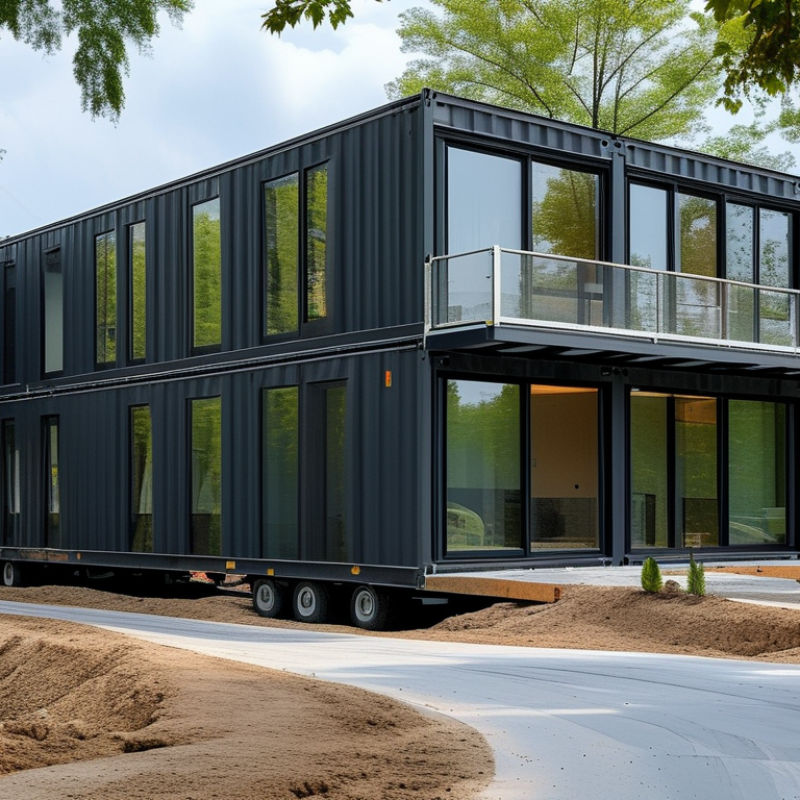
Modular houses are factory-built sections designed for assembly on a prepared site. Workers complete much of the framing, wiring, plumbing, and interior work indoors. This controlled environment can improve consistency and reduce weather-related delays. However, a modular house is not simply a normal home cut into pieces. Each module must survive lifting, loading, road movement, and final placement.
Transportation planning matters from the earliest design stage. Experienced project teams check module width, height, weight, turning radius, bridge limits, and overhead cables. They also survey the route for narrow streets, steep slopes, weak shoulders, and low branches. A route that looks suitable on a map may fail beside an old stone wall. Small details matter. The delivery vehicle needs enough space to enter, reverse, and leave safely. Local permits, traffic controls, and lifting arrangements should be confirmed before construction finishes.
At the site, the foundation must match the module positions precisely. A crane may need firm ground, timber mats, and clear airspace. Weather can change the schedule, especially during strong winds or heavy rain. Good planning includes a backup delivery date and protection for exposed openings. Plans are rarely perfect. One overlooked tree or inaccurate measurement can create expensive delays. Buyers should ask who checks the route, who coordinates permits, and who pays when access problems appear. Clear answers build trust before the first module leaves the factory.
Safe transport begins weeks before a modular home leaves the factory. Engineers review its drawings, dimensions, weight, and lifting points. The structure is inspected for loose fittings, unfinished joints, and fragile interior items. Workers secure cabinets, appliances, windows, and doors with padded restraints. They protect exposed surfaces from rain, dust, and road vibration. Moisture barriers matter, especially around open wall sections. A tiny gap can become expensive damage.
The module is placed on a suitable carrier and supported at approved points. Temporary bracing helps control movement during loading and turns. Crews check tie-down tension without crushing walls or floor framing. Route specialists measure bridges, corners, slopes, overhead cables, and narrow entrances. Local coordination may be required, depending on transport regulations. Weather is checked close to departure. Strong wind can change a safe schedule. It happens.
Tips: Ask for a written loading plan, inspection record, and delivery sequence. Confirm who checks the route and approves lifting equipment. Photograph sealed openings and interior restraints before departure. Keep the site clear, level, and ready for the crane or trailer. Do not remove braces early. Even experienced teams can overlook a loose panel, so a second inspection is worthwhile. Question unclear instructions and request updates after loading, arrival, and final placement.
How Are Modular Houses Transported: What Buyers Need to Know
The most common method is road transport on a flatbed trailer. Finished modules leave the factory wrapped in protective sheeting, then travel slowly to the building site. Heavy-duty straps, timber supports, and corner protection reduce movement during transit. The trailer must match the module’s width, weight, and center of gravity. A small mismatch can cause expensive damage.
Short-distance deliveries usually use specialized trucks. Longer journeys may combine road, rail, or sea freight. Rail can lower costs across long inland routes, but loading requirements are strict. Sea transport needs stronger weather protection and careful moisture control. Oversized modules may require route surveys, temporary traffic controls, and approved travel schedules. Bridges, sharp turns, low cables, and narrow roads all matter. Maps are not enough.
Cranes usually unload the modules at the site. Two cranes may be needed for very large sections. Lifting points are checked before the operation begins, and wind conditions can delay placement. Buyers should ask who manages transport, unloading, insurance, and site access. These responsibilities are sometimes unclear in early contracts. An apparently simple delivery can involve several contractors. Even experienced teams revise plans after inspecting the actual route. Ground conditions may change, and a promised delivery date can move. Careful communication remains essential.
Moving a modular house requires more than a suitable truck. The transport team must inspect the complete route before loading begins. They measure bridge clearances, road widths, turning spaces, slopes, and overhead utility lines. A route that looks simple on a map may become difficult beside a school or sharp bend.
Permits are usually coordinated with local road authorities and other relevant agencies. Requirements can change by location, load dimensions, travel hours, and seasonal conditions. The application may include transport dates, vehicle details, route drawings, and traffic-control plans. Accurate measurements matter. A small error in height can create a serious delay.
The escort plan is equally practical. Pilot vehicles may warn traffic, guide turns, and monitor restricted sections. Police support may be required in specific areas, depending on local rules. Crews also check temporary signs, parked vehicles, low branches, and construction zones shortly before departure. Weather can change the plan quickly. Wind matters.
Communication must remain active between the driver, escort team, site crew, and permit coordinator. At the destination, the team needs enough space for unloading and crane positioning. Sometimes, the planned route still needs revision on moving day. That is not necessarily poor planning; conditions change. Still, earlier field checks should be questioned when they rely too heavily on maps or old measurements.
Route surveys, oversize-load permits, utility coordination, and escort scheduling are typically arranged before a modular house is moved. The chart shows indicative U.S. planning ranges in business days; actual timing depends on module dimensions, jurisdictions, road conditions, and the number of agencies involved.
Larger or wider modules may require additional route engineering, temporary removal of roadside obstructions, police or pilot-car escorts, and separate permits from each authority along the route.
Before delivery, buyers should confirm the transport route with the builder and the installation crew. Measure gates, bridges, turning areas, overhead wires, and narrow corners. A truck may reach the property but still fail at the final turn. That detail is easy to miss.
Request the delivery schedule, lifting plan, and weather requirements in writing. Check whether the site has a firm, level foundation, clear access, and enough space for cranes or support vehicles. Confirm who handles permits, road closures, utility disconnection, and temporary traffic control. Responsibilities can become unclear quickly. Ask about insurance during loading, transport, unloading, and placement. Also inspect the modules before shipment. Photograph doors, windows, wall finishes, and visible fixtures.
On delivery day, keep the access route empty and mark underground services clearly. Watch for damaged wrapping, cracked glass, shifted fittings, or moisture inside the unit. Record concerns before installation continues. Do not rely only on verbal promises. A checklist is useful, but it cannot replace careful observation. Even experienced buyers may overlook drainage or crane clearance. That deserves a second look. After placement, verify alignment, connections, weather seals, plumbing, and electrical work with qualified professionals. Small gaps can become expensive problems after the first heavy rain.
: It is built in factory-made sections and assembled on a prepared site. Framing, wiring, plumbing, and interiors may be completed indoors.
Each module must survive lifting, loading, road movement, and placement. Designers check width, height, weight, turning space, and overhead clearance.
Teams inspect bridges, narrow streets, steep slopes, weak shoulders, low branches, and sharp corners. Maps are not enough.
Workers secure cabinets, appliances, windows, and doors with padded restraints. They also protect openings from rain, dust, and vibration.
Most modules travel on a flatbed trailer. Timber supports, strong straps, and corner protection help limit movement.
Yes, longer journeys may combine road, rail, or sea freight. Rail needs strict loading procedures, while sea travel needs stronger moisture protection.
A crane lifts the module onto its foundation. Very large sections may need two cranes, firm ground, lifting mats, and clear airspace.
Strong wind, heavy rain, inaccurate measurements, weak ground, or one overlooked tree can change the schedule. It happens.
Ask who checks the route, obtains permits, manages lifting, handles insurance, and pays for access problems. Written answers are safer.
No plan is perfect. Actual ground conditions or a hidden cable may force changes, so a second inspection and backup date are sensible.
Understanding how are modular houses transported is essential for a smooth building project. Unlike traditional homes, modular houses are constructed in sections at a controlled facility and then moved to the building site for final assembly. Before transport, each module is carefully inspected, reinforced, protected against weather, and secured with suitable supports and coverings. The transportation method may include specialized trailers, flatbed vehicles, or other heavy-haul equipment, depending on the module’s size, weight, design, and travel distance.
Successful delivery also requires detailed route planning. Transport coordinators assess road conditions, bridge clearances, turning areas, overhead obstacles, and site access, while arranging required permits and professional escorts when necessary. Buyers should confirm the delivery schedule, transportation responsibilities, site readiness, foundation measurements, utility access, and installation requirements in advance. They should also check how the modules will be unloaded, positioned, connected, and inspected after arrival. Careful preparation helps prevent delays, property damage, and unexpected costs during installation.

Eky Home